


2026/08/04
Techniques for Separating Liquid Components Using Distillation and Fractional Distillation

Techniques for separating liquid components include "distillation" and "fractional distillation."
Both are methods that utilize differences in the boiling points of substances.
However, there are differences in their purposes and methods.
While the former primarily extracts a single component, fractional distillation is a technique for separating multiple components in sequence.
They are applied in a wide variety of uses in daily life as well.
In this article, we will explain everything from the basics of distillation and fractional distillation to their application examples in detail.
Basics of Distillation and Fractional Distillation

There are two types of methods for separating liquid components.
They are distillation and fractional distillation.
Both are techniques that select components utilizing differences in boiling points; however, while the former extracts a single component, the latter is a method of vaporizing and separating components with different boiling points in order from lowest to highest, recovering each individually.
We will explain the principles and application examples of each in detail.
What is Distillation? | Principles and Purposes
This is a technique that heats a liquid mixture to separate components with different boiling points.
By cooling and re-liquefying the components that vaporize first due to heating, a substance of high purity can be obtained.
It is mainly used in many fields such as chemical experiments, food manufacturing, pharmaceutical development, and petroleum refining.
Difference Between Distillation and Fractional Distillation
Fractional distillation is a method of efficiently separating multiple components by repeatedly performing distillation.
It is particularly suitable for separating components with close boiling points.
By using a fractionating column or distillation tower, high-precision separation becomes possible.
Historical Background and Development
Distillation technology has been used since the times of ancient Greece, primarily utilized in the production of perfume and alcohol.
Later, it was developed by alchemists in medieval Europe as a scientific analytical technique, and since the 19th century, fractional distillation technology has also advanced alongside the evolution of the chemical industry.
Today, advanced fractional distillation equipment has been developed with energy conservation and environmental impact reduction in mind.
Specific Examples of Distillation and Fractional Distillation
As an example, obtaining pure water by distilling a sodium chloride aqueous solution can be cited.
Extracting ethanol from a mixture of water and ethanol is another typical application of distillation.
On the other hand, fractional distillation is an indispensable process in petroleum refining, used to efficiently separate gasoline, kerosene, diesel fuel, and heavy oil from crude oil.
Furthermore, in the food industry, it is also utilized for adjusting alcohol concentration and extracting flavor components.
Technical Explanation: How Distillation Works
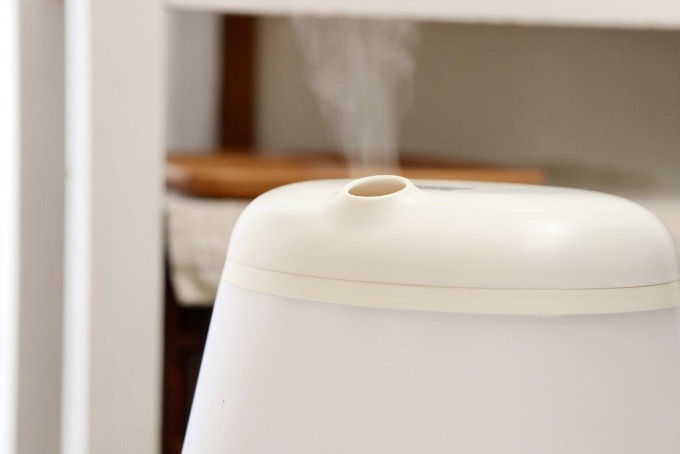
In distillation, the processes of heating, evaporation, and cooling are used to separate a liquid mixture into its individual components.
There are various techniques ranging from simple distillation methods to methods that enable more precise separation.
Here, we will explain the basic steps of distillation, necessary equipment, and precision distillation that achieves high-precision separation.
Steps of Simple Distillation
Simple distillation is a basic method where a liquid mixture is heated to vaporize components with low boiling points, which are then cooled and collected.
For example, when a sodium chloride aqueous solution is heated, only water vaporizes, and by cooling it, pure water is obtained.
Equipment and Methods Required for Distillation
To perform distillation, equipment such as a distilling flask, a Liebig condenser, and a thermometer is required.
During distillation, boiling stones are added to prevent bumping, and cooling water is flowed from bottom to top to efficiently liquefy the vapor.
Additionally, it is important not to seal the system too tightly to avoid a pressure buildup.
Pinpoint Component Extraction with Precision Distillation
Precision distillation is a technique for separating components with close boiling points with high accuracy.
It uses special equipment such as fractionating columns to extract specific components from complex mixtures.
For example, it enables the recovery of high-purity ethanol from a mixture of water and ethanol, and is utilized in fields such as pharmaceutical manufacturing.
Application Examples: Industrial Uses of Fractional Distillation
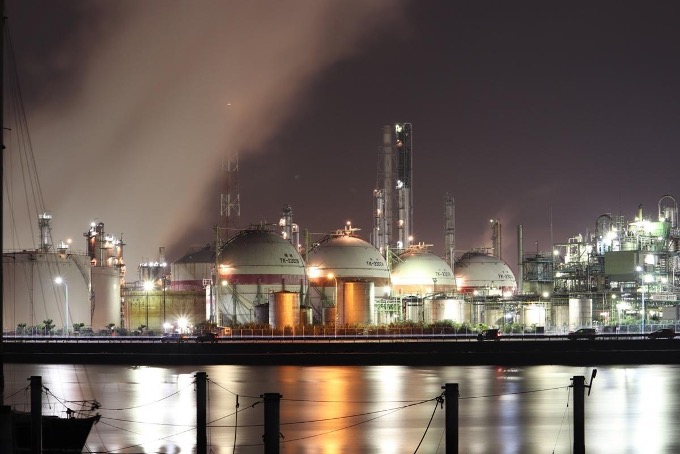
Fractional distillation is utilized in a wide range of fields such as petroleum refining, food manufacturing, and the chemical industry.
In particular, it is an essential technique in petroleum refining to separate gasoline and diesel fuel from crude oil, alcohol extraction, and flavor refining in foods.
Here, we will explain the specific industrial uses of fractional distillation in detail.
Fractional Distillation of Petroleum and Its Importance
The fractional distillation of petroleum is an extremely important process in the chemical industry.
Using a fractionating tower, crude oil is heated to separate gasoline, kerosene, diesel fuel, and other fractions step by step.
This enables the supply of automotive fuels and power generation fuels, and they are also used as raw materials for plastics and pharmaceuticals.
Brewing and Fractional Distillation | Alcohol Extraction
In the brewing industry, fractional distillation technology is utilized to recover ethanol from fermented liquids.
Since the boiling point of ethanol is lower than that of water, it is heated to vaporize, and then cooled to extract high-concentration ethanol.
This technology is applied not only to the production of alcoholic beverages, but also to the production of disinfectant ethanol and solvents.
Applications in Food Manufacturing
In the field of food manufacturing, distillation and fractional distillation technologies are utilized for extracting flavorings and refining edible oils.
For example, separating plant-derived aroma components and adding them as flavorings can enhance the flavor of food products.
Also, in the refining of vegetable oils, fractional distillation is used to remove impurities, contributing to improved safety and quality.
Precision Separation in the Chemical Industry
In the chemical industry, fractional distillation technology is indispensable for obtaining high-purity chemicals and pharmaceutical ingredients.
By using high-precision fractional distillation equipment, specific components are selectively separated from complex mixtures.
This makes it possible to improve product quality and production efficiency.
New Technologies and Future Prospects Using Distillation and Fractional Distillation

In distillation and fractional distillation technologies, new techniques that are more efficient and environmentally friendly than conventional methods have been developed over time, and are widely utilized in fields such as food, pharmaceuticals, and the chemical industry.
Here, we will explain the latest technological trends and future possibilities in detail.
New Extraction Technology Using Microwave Extraction Equipment
Microwave extraction equipment is a revolutionary technology that utilizes microwaves to efficiently extract components in a short time.
Compared to conventional distillation methods, it features lower energy consumption and can significantly shorten extraction time.
Furthermore, since low-temperature extraction is possible, applications in industrial fields such as food manufacturing and pharmaceutical development that require extraction of heat-sensitive components are expected.
As a highly efficient extraction method with low environmental impact, it is expected to become even more widespread in the future.
Reference: http://kanematsu-mwextract.jp/
Environmental Considerations | Sustainable Separation Technology
In the development of separation technologies, improving energy efficiency and reducing carbon dioxide emissions are important challenges.
As a countermeasure, attempts to utilize renewable energy sources such as solar thermal and geothermal power are underway.
In addition, by introducing heat integration technology, it becomes possible to reuse emitted heat energy, keeping overall energy consumption low.
Furthermore, by combining it with membrane separation technology, separation processes that minimize energy consumption compared to conventional methods are being realized.
These initiatives contribute significantly to reducing environmental impact and improving industrial sustainability.
Summary
Distillation and fractional distillation are essential technologies for separating liquid components.
In particular, fractional distillation is used in various fields including petroleum refining and the chemical industry, and is considered one of the key technologies that lead to improved energy efficiency.
If you are interested in microwave extraction equipment, please contact Kanematsu Engineering Co., Ltd.
It does not target all large-scale industrial processes like the fractional distillation mentioned in this article, and suitability for implementation varies depending on the application and scale.
We will provide the best proposal tailored to your company.
Contact Us


Head Office Location:
3981-7 Nunoshida, Kochi City, Kochi Prefecture
TEL:
088-845-5511
FAX:
088-845-5211
Company Information
Company Information TOP
Top Message
Management Philosophy
Company Profile
Sustainability
History
Product Information
Suction & Cleaning (Environmental Maintenance Equipment) Related
Pre-production Vehicle Information
K&E News
History of Technology Development
Microwave-related Products
Inquiry regarding microwave extraction equipment
Blog
Locations & Services
Sales Office List
Service Factory List
Useful Information
Web Parts Ordering

Blog
KCS Support (Members Only)
Investor Relations
IR Information Top
Management Information
IR Library
Financial Information
Stock and Shareholder Information
Contact Us

Privacy Policy
Terms of Use
CSR Procurement Guidelines

Harassment Prevention Initiatives in Recruitment Activities
Basic Policy on Sexual Harassment of Job Seekers
Basic Policy on Customer Harassment
KANEMATSU ENGINEERING CO.,LTD. All rights reserved.